
News
What Post-Purchase Technical Support Should a Qualified Peptide Factory Provide When Evaluating a Long-Term Partner?
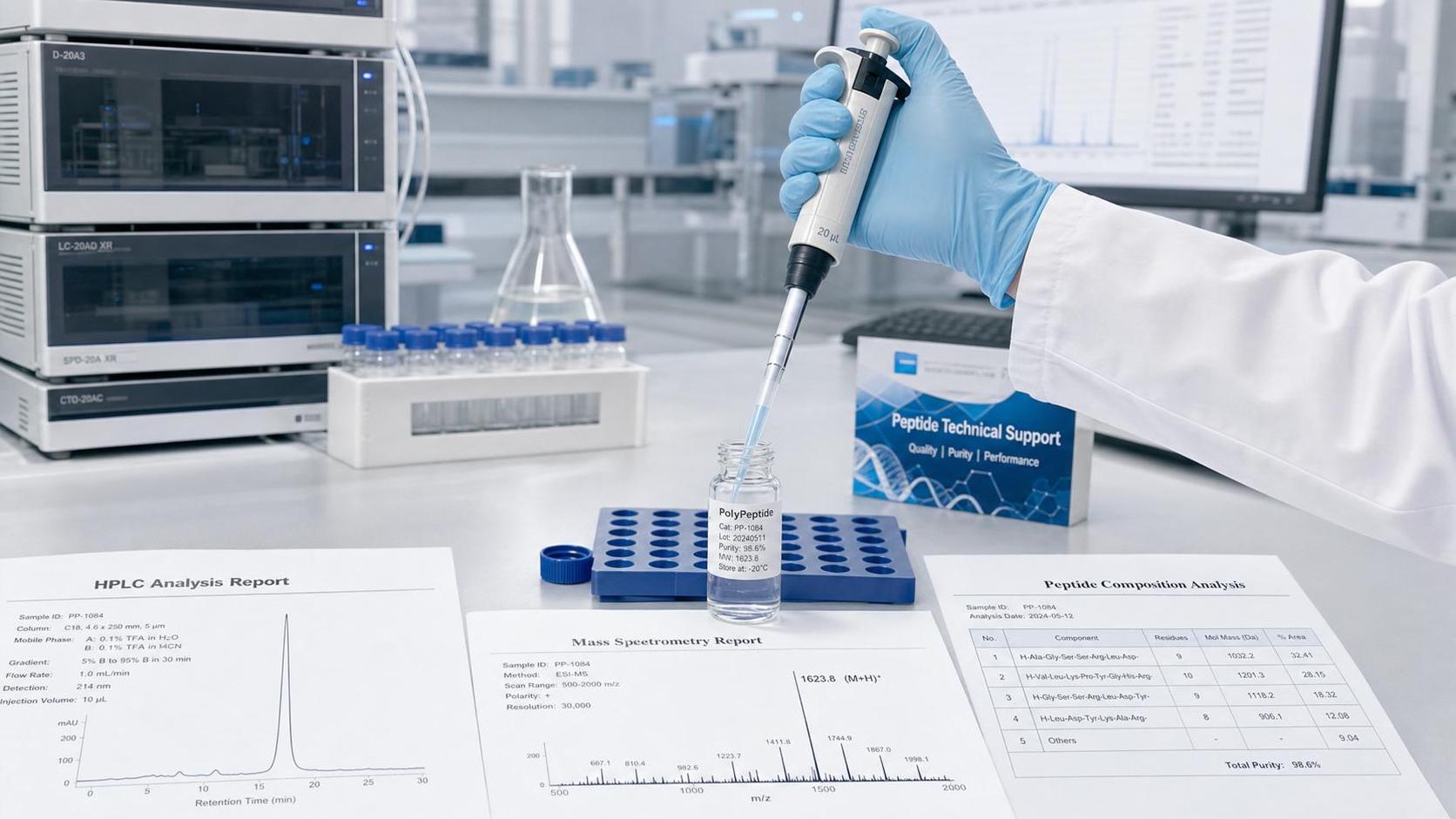
In the fields of biomedical R&D, cosmetic ingredient development, and life sciences research, sourcing peptide raw materials is rarely a one-time transaction; it is a long-term collaborative journey. Because peptide molecules have complex structures and highly variable physicochemical properties, researchers and formulators frequently encounter tricky challenges regarding solubility, storage, or formulation stability in practical applications.
Therefore, when evaluating a potential long-term partner, look beyond raw capacity and manufacturing quality. A peptide factory’s post-purchase technical support is the ultimate litmus test for a sustainable relationship. A truly qualified peptide factory should deliver comprehensive technical support across three core dimensions:
1. Expert Guidance on Physicochemical Properties and Application ("How to Use It")
Once a peptide is delivered, the very first hurdle researchers or formulators face at the application end is often dissolution and stability.
▪ Tailored Dissolution Protocols: The hydrophobicity, acidity, or alkalinity of peptide sequences varies drastically. A qualified factory does not just hand over a generic instruction sheet. Instead, they provide one-on-one guidance on using acidic, basic, or organic solvent systems tailored to your specific sequence, preventing the waste of precious samples during trial-and-error.
▪ Formulation Compatibility Advice: For clients in cosmetics or pharmaceutical R&D, a factory's technical experts should offer professional advice on how a peptide behaves under specific pH levels, temperatures, and alongside co-existing ingredients (such as preservatives or surfactants), collaborating with you to optimize the final formulation.
2. Comprehensive Traceability and Regulatory Documentation Support ("How to Prove It")
As global regulatory environments (such as new cosmetic ingredient regulations and pharmaceutical review standards) become increasingly stringent, compliance documentation has become a mandatory prerequisite for project advancement.
An outstanding peptide factory must efficiently provide a complete suite of traceable quality and compliance dossiers post-delivery:
▪ Core Analytical Reports: In-depth interpretation and troubleshooting of High-Performance Liquid Chromatography (HPLC) chromatograms and Mass Spectrometry (MS) spectra.
▪ Advanced Compliance Files: For industrial or preclinical projects, the factory should readily supply impurity profiles, endotoxin test data, and sterility certificates that align with domestic or international filing requirements. They should also stand ready to provide full technical backing and documentation support whenever a client faces an official regulatory audit.
3. Collaborative Troubleshooting and a Standardized "Re-Testing Mechanism" ("How to Solve It")
If an experimental or manufacturing result falls short of expectations downstream, pinpointing the root cause can be difficult. A qualified factory never deflects responsibility; instead, it deploys a mature protocol for handling anomalies.
▪ Joint Root-Cause Analysis: The factory should assemble a veteran technical team to review the issue alongside the client—investigating whether the anomaly stemmed from transport temperature deviations, improper storage, dilution errors, or actual peptide degradation.
▪ Fair Re-Testing Workflows: A qualified partner maintains a standardized retention sample system for re-testing. If a quality fluctuation is confirmed to have originated on the manufacturing side, they can swiftly initiate a replacement or re-synthesis protocol, minimizing any timeline delays for the client's project.
Conclusion
When evaluating a peptide factory, the rule of thumb is: "Partnerships start with quality, solidify with lead times, and endure through post-purchase support." A factory armed with comprehensive technical support is far more than a raw material supplier—it acts as a technical co-pilot safeguarding your scientific and industrial projects. This deep technical backing is the most resilient moat for long-term supply chain security.
Navigation
- Can a Peptide Factory Provide Custom Peptide Synthesis Services?
- Why Is GMP Certification Important for a Peptide Factory?
- What Post-Purchase Technical Support Should a Qualified Peptide Factory Provide When Evaluating a Long-Term Partner?
- How Does a Modern Peptide Factory Control Impurity Levels During Semaglutide Raw Material Production?
- How Do You Choose a Reliable Peptide Factory?
- What Does a Peptide Factory Do? A Complete Guide for Buyers