
News
How Do You Choose a Reliable Peptide Factory?
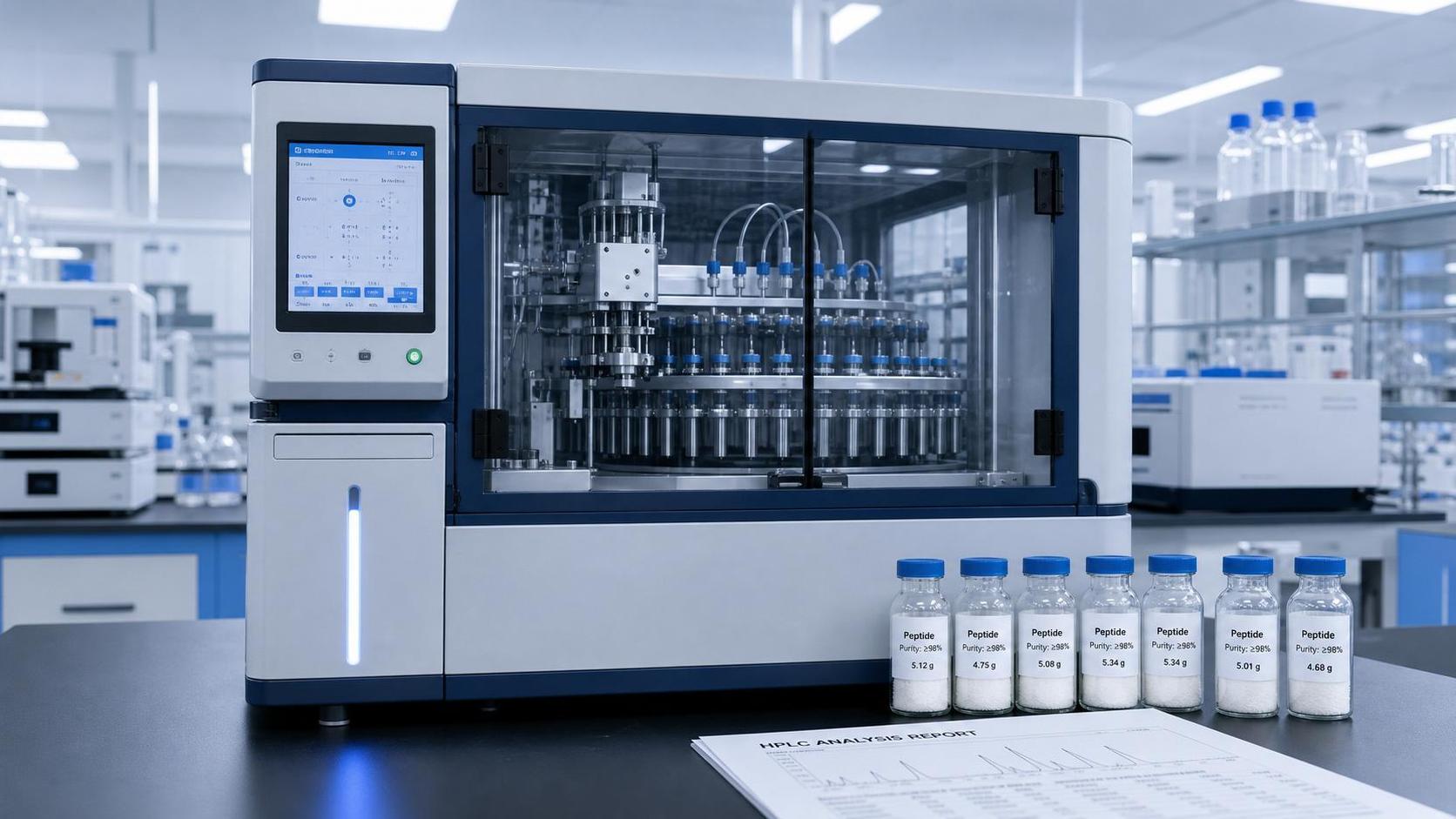
In the rapidly evolving fields of biomedicine, cosmetics, and life sciences, peptides have become a cornerstone of innovation. Whether you are sourcing blockbusters like Semaglutide and Tirzepatide or custom research sequences, finding a trustworthy manufacturing partner is paramount. The quality of your peptide directly dictates the success of your downstream research, product stability, and brand reputation.
But with countless suppliers in the global market, how do you separate the industry leaders from the rest? Here is a comprehensive guide to evaluating and choosing a reliable peptide factory.
1. Stringent Quality Control and Qualification Standards
The absolute baseline for any chemical or biological manufacturer is its quality management system. A reputable peptide factory must hold internationally recognized certifications, such as ISO9001, and adhere strictly to global manufacturing standards.
When vetting a supplier, do not hesitate to ask for their analytical documentation. A reliable factory will transparently provide:
◾ High-Performance Liquid Chromatography (HPLC) reports to verify purity.
◾ Mass Spectrometry (MS) data to confirm molecular weight and identity.
For industrial or cosmetic applications, inquire about their batch-to-batch consistency and stability testing protocols to ensure that the product you receive today matches the quality of the product you receive next year.
2. Advanced Technology and Scale-Up Capabilities
Peptide synthesis is highly technical, demanding advanced equipment and deep chemical expertise. Different sequences require different synthetic methodologies—such as Solid-Phase Peptide Synthesis (SPPS), Liquid-Phase Peptide Synthesis (LPPS), or recombinant expression.
A professional factory should possess:
◾ State-of-the-art automated synthesizers and large-scale purification columns.
◾ The capability to scale seamlessly from milligram-level custom synthesis for R&D to multi-kilogram commercial production.
◾ Expertise in handling complex modifications, such as cyclic peptides, phosphorylation, or specific conjugations.
If a factory struggles with complex structures or lacks scalable capacity, they may delay your project’s time-to-market.
3. Professional Technical Support and Communication
International sourcing demands clear, transparent, and timely communication. A reliable factory is more than just a vendor; they act as an extension of your own technical team.
An elite manufacturer provides dedicated account managers and technical specialists who understand your industry’s specific needs. They should be able to optimize sequences for better stability, troubleshoot solubility issues, and provide comprehensive documentation for international customs clearance. Rapid response times to inquiries and technical anomalies are a strong indicator of a factory's operational health and customer-first mindset.
Conclusion
Choosing the right peptide factory is a strategic investment in your business's future. By prioritizing rigorous quality control, verifying scalable technical infrastructure, and demanding transparent, professional communication, you can establish a secure and highly efficient supply chain. Partnering with a premier manufacturer ensures your projects stand on a foundation of purity, safety, and reliability.
Navigation
- Can a Peptide Factory Provide Custom Peptide Synthesis Services?
- Why Is GMP Certification Important for a Peptide Factory?
- What Post-Purchase Technical Support Should a Qualified Peptide Factory Provide When Evaluating a Long-Term Partner?
- How Does a Modern Peptide Factory Control Impurity Levels During Semaglutide Raw Material Production?
- How Do You Choose a Reliable Peptide Factory?
- What Does a Peptide Factory Do? A Complete Guide for Buyers